Wednesday, 17 October 2012

Rock and Roll Architecture updated

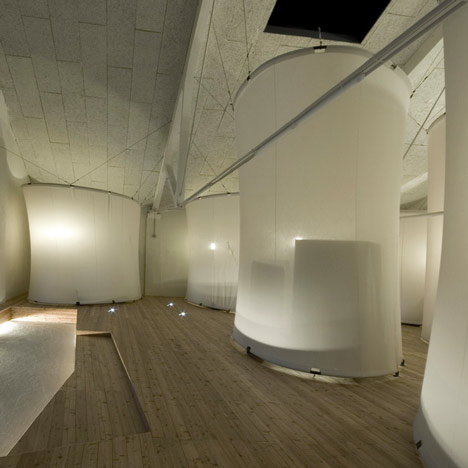
The Boilerhouse Battersea. Not actually a conversion by temporary internal structures but close enough.


I have been imagining ways to reuse redundant buildings. There's nothing unusual in that yet I can't find any examples, some close but not quite, of what I have in mind. 

In my part of Suffolk we have many churches without sufficient congregations to support them and historic but under-used buildings and rural agencies have been approached by people looking for ways to protect those buildings and keep them in use. The church authorities sound amenable to leasing them for community use.

Suffolk generally lacks backpacker or otherwise affordable accommodation for visitors on a budget and yet East Anglia has plenty to attract them.

So we should consider how to convert one into the other. After all, St Paul was a tent maker.

Things to consider:

Many of our churches and similar buildings are in a place of natural beauty so such adaptation should not impact the exterior.

They also have a historic interior fabric that the owners (and the community around it) wouldn't take kindly to significant amendment.

Churches are strapped for cash to maintain them. Home owners with chancel repair liabilities are refusing to pay them.

There isn't much demand in Suffolk for more community space like village halls or much excess demand for space that can't be met by village halls. Yet some village halls and now-redundant schools have realised the potential market for accommodation and have considered part conversion as hostels as a way of making their buildings sustainable.

Funds from investors and public agencies are likely to be tight but there are many social benefits from local skills development and such plans could be a catalyst for employment.

Both churches and water towers offer large interior volumes but don't have much infrastructure, in the way that you would use to convert an old prison into a hotel. Converting buildings to high specification sleeping accommodation is naturally expensive but spartan accommodation need not be uncomfortable.

Architecture can be exciting. Sleeping and staying in a novel space can add value to the experience.

I imagine a solution lies with the reuse of modular building components combined with tensile fabric and inflatable structures, warehouse racking and flooring and portable kitchen and bathroom units with the portable utility distribution systems that are already on the market. That approach could enable the adaptation of sensitive buildings with large but delicate interior spaces into multi purpose accommodation which would protect the historic fabric and, if need be, could be removed later leaving the original structure intact.

I call this approach 'rock and roll architecture'. It takes the technology widely used in festival staging, film production and circuses who turn up and erect a village overnight then move on without a trace.


A tent erected inside a Berkeley barn to house a NMR machine at a critical constant temperature.
School library reading area made of recycled waste materials from nearby furniture factory

At one particular site I know, it looks possible to bring in modular kitchen and bathroom units and erect a mezzanine floor above them with wooden beach huts (with a nod to nearby Southwold) for sleeping accommodation. A translucent fabric tent suspended from the ceiling - or even a bog standard wedding marquee - would cut down the draughts and protect the interior to be the common areas.


Yoshitomo Nara + graf installation in Baltic, Gateshead 2008
Stacking on mezzanines. Small caravans could be dismantled and rebuilt indoors as private space.

This image an Amsterdam theatre set from 2005 designed by Catherina Scholten for a production of Checkov’s Ivanov went viral on the internet as a  'Hillbilly High-rise'.
scaffolding and lino samples recycled into mezzanine cafe
one of many sleeping pod ideas on the market

Inflatable workshop in an aircraft hanger
ModTruss is an incredibly flexible and useful way to create floors and walls

This approach is similar but quite different to the now commonplace reuse of shipping containers or modular outdoor structures for accommodation. One challenge is although you don't have the weather proofing problems building inside an old church, access could be a lot tighter. All materials might have to come through a 6' x 6' door. Ideally the heating plant could be housed in a trailer next door. Human waste might need a macerator to transport it to the sewers as it might not be routed underground. 

I think a plastic design and build approach is feasible. If you needed to extend or adapt or completely rethink a project, the construction methods are simple and cheap enough to allow experiment and find the optimum solutions by trial and error. While temporary structures are not as durable as permanent conversions, they probably have a much faster ROI and there is the advantage that if a hostel - or another use - doesn't pan out, then there isn't an expensive white elephant left behind. But if the plan does work, then de-installation won't create a huge amount of waste nor significantly increase the cost of conversion.

I don't know if temporary adaptation has as much planning regulation as permanent structures but from what references I see, it don't think so. Certainly the best way to preserve historic buildings is to keep them in use. Materials used in portable and modular construction are generally already compliant with fire and structural regulations. A social enterprise set up to undertake conversion projects would be using low-tech production methods that are rapidly scalable and the learning and skills of the personnel - which might be recruited from NEETs - will be transferable into other occupations, along with the materials and techniques being compatible over a range of sites.

The only example of internal temporary structures I have been able to find so far is All Souls Church in Bolton. OMI Architects have got approval to convert a redundant church into a community centre by erecting pods inside the existing space. This bespoke solution is more permanent, and at £3 million pounds, much more expensive than what I envisage but it serves to illustrate the potential.

Architect Jim Eyre who created the 12,000 seat basketball arena, one of the biggest temporary structures ever built for an Olympics, told the Independent: "We're seeing intensive use of temporary structures and in future Olympics I expect this to increase.. I find the idea of 'nomadic architecture' appealing. Temporary buildings can become more adaptable, transportable or reconfigurable."


If you are a vendor or property owner or community interested in the reuse of buildings in this way, please get in touch.

Bolton All Souls - OMI Architects

Bolton All Souls - OMI Architects

Bolton All Souls - OMI Architects

Tensile fabric is great for structures and space dividers
MiNO by Antonio Ravalli Architetti
Antonio Ravalli Architetti
PKL modular kitchens


Monday, 1 October 2012

100 metres of beach


The balloon industry widely claims that released latex balloons ascend into the upper atmosphere where they freeze and burst into biodegradable and harmless microscopic fragments falling over a wide area. However recent research says that actually 80% of the balloon will remain intact and 10% of the balloons released won't burst at all.

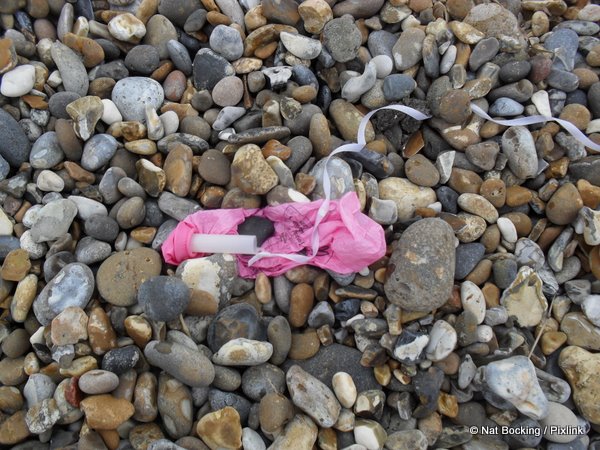
I don't need to argue with them the merits of all the scientific research because walking 100 metres of Dunwich Beach I found seven balloons with strings and valves that can choke sea turtles and sea-birds (who feed on jellyfish) and farm animals. Even if every measure is taken to reduce the risk of harm, i.e. not attaching strings or tags, which evidently almost never happens in the hundreds of balloon release photos and videos published each year, a balloon release is PLAIN AND SIMPLE LITTERING.

Sorry for shouting but that simple point seems to be missed by every public relations apologist and churnalist promoting each balloon release reported in the media, usually for good causes. Every officially sanctioned balloon release seems to encourage thousands more imitators who use strings and mylar balloons that compounds the harm of littering with animal cruelty and causing power blackouts. Let's leave aside the waste of helium gas but it is common sense that something in limited supply would be better used in life saving MRI scanners rather than balloon releases to raise "awareness" for ten seconds and to raise money which others elsewhere have to spend on cleaning them up.

Dunwich Beach is in an area of outstanding natural beauty. The rangers working for various agencies in the area; Natural England, RSPB and Forestry Commission tell me balloon litter is a serious nuisance. They are constantly picking up balloon litter caught in fences and trees, a time consuming process stretching their limited resources. Also the degraded latex leaves a sticky residue, the colour dye leaches out and stains the ground. With those I found on Dunwich Beach, the dye was as durable as permanent marker.


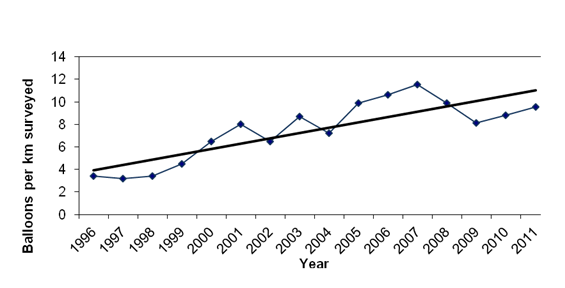
How many tonnes of litter does seven balloons per 100 metres add up to on the 18,000 km coastline of the UK? Well I reckon at least 2 million balloons at 12 grams per balloon comes to 24 tonnes which is two council rubbish lorries full and there must be hundreds of tonnes of litter falling to earth elsewhere. When these balloons land in water or on land they can kill years later. The national Beachwatch survey back in 2006 put the amount of litter rising from 3 sites of balloon litter per square kilometre to 10 per sq km in just ten years. I have seen no evidence yet that this trend has stopped or reversed.


More evidence and links are in a previous post. Follow #balloonrelease on twitter to make a difference. Tweet a link to this page with tinyurl.com/sufkbeach


Friday, 21 September 2012

Gerry Saunders MBE


Because it's behind a paywall to the rest of us and because I am indebted to this great and wonderful man, I am posting this Times obituary of Gerry Saunders by Eric Musgrave with a couple of annotations (in italics).


Gerry Saunders, who has died aged 83 years, was annoyed that an operation to remove a troublesome false hip (a hip replacement that had become infected) prevented him from attending on June 12 this year the 125th anniversary party for Drapers magazine, previously known as Drapers Record.

As he wrote in the celebratory issue of the fashion industry “bible”, one of his first major jobs when he joined the magazine as chief reporter in 1958 was to cover its 75th anniversary. He also oversaw the production of the special book produced for its 100th anniversary in 1987.

He joined Drapers Record when he was almost 30 with nearly 15 years’ experience in clothing trade journalism behind him, but his name always will be associated with DR, as the title was affectionately known. He was immensely proud of being made editor in November 1974 of the world-renowned trade title that has been published every week since 6 August 1887.

In its first editorial column, The Drapers’ Record, as it was then styled, promised its readers: “Our method of business is to produce something better than has ever been seen before in the way of trade journalism”. This was the creed that Saunders followed throughout his working life and enthusiastically passed on to the many editorial and commercial staff who worked with him.

Gerald Edmund Saunders was born in Fulham, London in 1929 to working-class parents. Although he was a bright and hard-working student at school, he left aged 15. It wasn’t until aged 40 that he learned that his school had wanted him to stay on and work towards university entrance. His family needed him to go out to work, however, and so in 1945, he started as a junior reporter for Century Press Ltd, working on long-forgotten trade titles like Textile Bulletin, Women’s Wear News, Man and His Clothes, and Fur Weekly News.

He did his National Service in the Royal Air Force from 1947 to 1949, where he learned to repair radios, a skill he later appreciated. 

He was also a skilled toy maker; fashioning wooden bridges and stations equal to the best available for his grandson's train set with only basic tools on his kitchen table. This skill and interest was perhaps a recognition of his father's trade of carpenter's mate. "A mate, not a carpenter" he would note if telling a family story, pointing out his father's unskilled status. Though his father Len provided reliably, the career opportunities he could provide his son were limited to that of a day-labourer and the work available at Olympia Exhibition Hall. His mother cleaned for a magazine publisher and she prevailed on him to give her boy an interview. On meeting him, Gerry once regaled, the man said "boy, I like the cut of your jib" and so mentored him. Gerry was a self-made man but unlike some, he did not adopt the cocky swagger of one, acknowledging often in his counsel it took luck as much as application and personality to rise up the ladder. On hearing his father's admission late in life that he hadn't responded to the school's overtures for Gerry to apply to university because he feared he couldn't afford to send him - not knowing of the assistance he would get - Gerry was uncharacteristically downcast, the colour literally drained from his face with the realisation of what might have been. A credit and a measure of his great strength was he didn't dwell on it for long. His humour left him for ten minutes and then he topped up everyone's glass and carried on with the jolly conversation and never mentioned it again.

Once demobbed, he joined the men’s wear title The Outfitter as senior reporter. In 1958, Saunders moved to Drapers Record as chief reporter. In 1962 DR, Men’s Wear and other titles were acquired by Roy (later Lord) Thomson, the Canadian publishing tycoon. In 1968 they were grouped into a subsidiary of The Thomson Organisation called Textile Trade Publications, based at Knightway House, 20 Soho Square, W1, close to the garment district around Great Portland Street.

Saunders was made editor in 1974 and a director of TTP in 1978. He moved from the editorial to the commercial in 1980 when he was named publisher of DR, Men’s Wear, British Clothing Manufacturer and Pins & Needles (the only consumer title in the group). Saunders became group publisher of the Thomson fashion titles in 1988 and publishing director in 1989.

The epitome of an old-school journalist, Saunders was a stickler for accuracy in reporting and grammar. The editorial team on DR waited with trepidation each Friday for Saunders’ marked-up copy of the latest issue to be circulated. It was covered with his comments, positive and negative, all marked with his unmistakeable GES signature.

He was always immaculately dressed and groomed, his hair slicked back like one of his cricketing idols, Denis Compton. He once admitted that his dream was to walk back from the crease to the pavilion at Lords with G E Saunders 100 Not Out on the scorecard versus Australia. A sociable character, he was renowned for his dry sense of humour and a reporter’s ability to converse easily with anyone he met. Unlike some of his contemporaries in journalism, he displayed no sexual discrimination and most of his senior editorial staff from the late 1970s onwards were women.

His devotion to magazines saw him join the editorial training committee of the Periodicals Training Council from 1982 to 1991, the year in which he joined the PTC board. He was chairman of judges for the PTC Magazine Journalist of the Year Awards in 1987 and again in 1993. In 1995 he was chairman of the working party that rewrote and redesigned the PTC training manual for magazine journalists.

Adept at handling the delicate politics among the factions of the UK fashion industry, Saunders was founder-chairman in 1981 of the Fashion Industry Action Group, which attempted to regulate the confusing schedule of clothing exhibitions in London. Saunders was chairman until FIAG was absorbed in 1985 into the British Fashion Council, which today organises London Fashion Week. He was vice-chairman of the BFC until 1997 and continued as BFC treasurer until 1998.

Saunders was an enthusiastic supporter of the fashion industry’s leading charity, The Cottage Homes (now known as Retail Trust). Under his chairmanship, the January 1987 Cottages Homes Ball, billed as the Drapers Record Centenary Ball, raised a then-record £135,000. In 1987/88, as national president of appeal, he raised £831,000, the third highest-ever total at the time. In 1993/94, he raised £839,000, knocking his previous effort into fourth place. He served a three-year term as chairman of the charity’s trustees from September 1997.

When the Thomson business magazines were acquired by Emap in February 1993, Saunders became publishing development director for the new owners and is remembered by many from the Emap team for the generous way he shared his decades of experience.

Saunders retired from full-time publishing aged 65 at the end of May 1994, but such was his knowledge and stature in the industry that he was retained by Emap as a paid consultant until 2001, by which time he had clocked up 43 years’ service to Drapers Record and 56 years in all to the fashion sector. He was elected a Fellow of the Clothing and Footwear Institute (FCI) in 1985 and made MBE in the New Year’s Honours List 1989 for services to journalism.

Gerry was exceedingly generous of his skill and time to his community, acting as press officer for the Muswell Hill Festival and editing and compositing and delivering the newsletter of the Muswell Hill and Fortis Green Association six times a year, its deadlines a priority in his social calender. In this modest title many a local reporter found a through appraisal of what was really going on in Hornsey Town Hall or got wind of another attempt to diminish the architecture and ambiance of Alexandra Palace and Muswell Hill Broadway, where he was a well known face.

His first marriage to Barbara Violet ended in divorce in 1958. There were two sons, David and Martin, from that marriage. Martin predeceased him. In 1960 he married Anne New and they had two daughters Kitty and Helen. The family has been comforted by the many tributes sent since Gerry Saunders died on July 3 due to complications following his hip operation.

Gerry Saunders MBE, fashion industry magazine journalist and publisher, was born on May 18, 1929. He died on July 3, 2012, aged 83.

It was about mid-February I recall that Drapers rang Gerry and asked if they could interview him about the time he was their editor and publisher for its 125th anniversary edition. They were also keen to locate and interview Jean Guest, the fashion editor, who had had an illustrious career there spanning a golden age of British fashion from 1936-1960.

Gerry let the journalist down gently with a chuckle; of course he had known her but "Jean Guest" was pseudonym. Back then reporters didn't have bylines in the trade press, the star personality was always the collective magazine. It also made economic sense to publishers to have 'stars' of anyone capable of the task
they could employ at the lowest possible price.

Gerry urged Drapers to conduct his interview as soon as possible as he was going into hospital in a few days to have his infected artificial hip removed and anticipated a long period of recuperation with a course of powerful antibiotics that had almost bowled him out before. At the time he was in great pain but being his usual stoic self about it. Of course we, the family, had worries about him having another major operation but he assured us he had discussed it with his surgeon and felt it was perfectly safe. What some probably felt and didn't say was that Gerry had likely decided already: it was take a risk and keep an active social life with his family, neighbours and the few "Old Devils" still going from his working life or become an invalid, walking with a zimmer frame and dependent on powerful pain killers and social care (no matter that it was willingly offered), and so that was that.


On first arriving at his home for a visit on a Friday, Gerry asked if I could take a photo of him for Drapers. He'd given the interview but they had then asked for a recent photo and a camera phone one he had didn't suit. With one thing and another, we didn't get round to it on Saturday morning and the light that afternoon was poor and then there were too many guests. It was after a generously lubricated Sunday lunch which had put him in good cheer, though he was dismayed he could not get up and bustle afterwards to clear up the kitchen - his non-negotiable condition if others did the cooking - and just we had packed the children and our bags in the car to go home, we remembered the need for his photograph and so I snatched a moment of intermittent sunlight to sit him by the garden window to take his head-shot. 


He was uncharacteristically uncomfortable at being photographed, ever fastidious, he realised he hadn't shaved that morning and was concerned about his stubble but there wasn't time to get him upstairs so I joked it didn't matter, with my luck as a photographer it was only going to be used a column wide. I took a few trial frames, trying to get him to smile but the movement to the chair had set off a spasm of pain and he was wincing and uncomfortable when I tried to adjust his posture. He gamely put on an air of bonhomie for the camera, I am sure it meant something to him to fulfil his promise to the editor waiting for the pictures. We then quickly selected a few choices and emailed them from his Mac - he always kept up to date - to meet the morning deadline. It was unsaid but I am sure it crossed his mind as much as mine that with him going into hospital the next morning, these might be the last photos taken of him "in all my pomp".


Gerry recovered as expected from his operation and so several more photos were taken of him at the Royal Free with well wishers and his family but a few hours before his discharge he was struck by the first of several catastrophic heart attacks.


Hearing that his obituary was in the Times online edition but not the print edition (though he was a faithful subscriber) Anne commented that he would have thought the editor's decision was right; he had risen high in the world but not so high to deserve that accolade. Many of the trade press have run obits and a few more remain to come. In giving his eulogies (it was impossible for just one speaker to deliver all the praise he he deserved) his friends shared a common theme; if you seek his monument; look around you. For Gerry it is not the bricks and mortar such as Wren left behind, nor his ink and paper which spurred on British trade during Gerry's time at the helm for London to became a fashion capital alongside Paris, New York and Milan, but the legacy of love and a life well lived that inspires all who knew him and so perpetuates the truth that nice guys do finish first.


Wednesday, 19 September 2012

Seaplane pros & cons, a pilot's view

Andrew Airways Beaver floatplane at Kodiak seaplane port found at Katmai Bears

I have a commercial pilot's license and used to work as a commercial seaplane pilot in Seattle and Alaska. I was asked to send you my thoughts on your blog idea for seaplane service between London and Suffolk. 

Basically, I believe that seaplanes are only commercially practical for places that cannot be reached by road or airport, mostly limiting their destinations to roadless areas of Alaska and Canada, and islands where ferry routes are either very long or nonexistent.

I once spent a summer flying for a small flying service in Kodiak, Alaska. The Kodiak Island chain has one town (Kodiak) and six villages. All of these have airports and we virtually never had customers to go there. Instead, our destinations consisted of bear watching tours, and fishing, logging, and tourist sites in the wilderness. (Most of Kodiak Island has no road network.)

Here are the obstacles that seaplanes have to face when competing with small land planes or automobiles:

1: Seaplanes are costly to operate. Small land planes are already expensive per passenger mile in comparison with either cars or large airliners. Seaplanes have additional operating costs: the floats themselves cost about 40% of the price of the airplane, and sheet metal damage is frequent. The latter is caused by such things as submerged rocks, docks, and waves from passing boats and mishaps are mostly unavoidable due to the fact that seaplanes are meant to go where the environment is not closely controlled. In addition, seaplanes face salt-water corrosion and fuel costs (due to higher drag).

2: Seaplanes do not have much capacity. A seaplane has a few hundred pounds less useful load than the land plane version of the same type, due to the weight of the floats which must be subtracted from the max gross weight. This is the main reason we could not compete with land plane flights to the villages on Kodiak.

Your argument that seaplanes could reduce burdens on country roads in England doesn't appear to hold water. A busy seaplane operation could carry perhaps a few hundred passengers per week, which is an insignificant load for even the smallest dirt road.

The deHavilland Beaver has a cargo capacity of roughly 1200 pounds, the same volume as a small pickup truck, and seats six passengers at a maximum.

It's the real cost of increasing the capacity of roads that needs to be looked at. Widening the A12 will add 15kg CO2 to every car journey driving on it for ten years at present traffic. Every flight will emit 4.375 kg per passenger, that's less than the cars now driving it. Dornier and other aircraft manufacturers are continuing seaplane (or more properly amphibious) R&D with commuter sized aircraft.


Seastar-retouchedBannerI.jpg
Dornier Seastar

Diverting traffic to seaplanes will not lighten the load on the roads but when the roads in Suffolk are often at gridlock and the trains are at capacity, the convenience and speed of a seaplane journey despite its cost premium will become more attractive.


For the seaplanes you most find in service in Canada:


type cruise passengers
De Havilland Beaver 110 6
De Havilland Turbine Beaver 140 7
De Havilland Turbine Otter 134 10
Cessna Caravan 155 9

3: Seaplanes are not fast. Any airplane trip involves time to travel to/from the airport, load up, and prepare the plane for takeoff. The result is that an airplane trip actually takes longer than a car ride for any trip less than roughly 100-200 miles.

That really depends on the locations served. If a seaplane serves urban city centres as they do in Seattle and Vancouver and Victoria, I think for business journeys between these places they have the edge on roads. Getting from Seattle to Victoria or Vancouver is a major undertaking by road (especially if there's any hold ups at the international border) but its only 45 and 70 minutes by seaplane. Going from Ipswich to Amsterdam is similarly fraught with difficulty but would be relatively fast and easy by seaplane.

Ipswich has no airport but it sits on a large river, the Orwell. To fly anywhere from around here you need to travel an hour to Stansted or Norwich. If you are fortunate to live near to Norwich, you can ticket to fly to Amsterdam and be flying onto the USA or Asia before anyone can get to Heathrow or Gatwick, your only other choices. A 170 mile hop from Ipswich's waterfront for Amsterdam connections might be attractive for that reason.


Seaplanes are slower than land planes of the same type due to extra drag. The deHavilland Beaver, the most-used seaplane, cruises at 110-120 mph.

Where there is enough land near a place with demand for an airport, there is usually a premium on its price and demand for using it for other development and understandable concerns about noise and safety from the local population. A water landing site generally has much fewer conflicting demands for it and seaplanes can peacefully coexist within harbours and amidst boat traffic. Were it not for some ridiculous regulations that don't exist in the US and Canada, the investment required to establish a seaplane hub in Britain would be a fraction of a new ground airport.

4: Seaplanes are not more fuel efficient. Your blog's table of vehicle carbon outputs doesn't look right. A Beaver consumes 22 gal. of gasoline per hour, for a gas mileage of 5 MPG. This is comparable to a bus or 18-wheel truck.

I don't say they are more fuel efficient. The CO2 table puts a small plane the same CO2 per passenger mile as a train. But it's the total carbon output that matters when you also account for the carbon output of building roads and tracks and stations and airports over the service life. Technological development will make aircraft engines cleaner and more efficient. The development of composite materials is making the aircraft hulls safer, lighter and corrosion-proof.

We also need to be thinking about the environmental cost of building more infrastructure and one solution is to use an abundant and cheap resource i.e. open water over a resource that is scarce and expensive in Britain. Extensive research has shown that hull for hull, seaplanes have less environmental impact on water quality than private sail boats.


In conclusion, to start a viable seaplane service you have to find a route to a place that is not readily reachable by road, has a reasonable amount of high-price tourist or business traffic, and has water available.

I don't know southern England very well, but I would assume that there is no place that can't be reached by road except for islands. This does not eliminate all possibilities—ferry rides to Ireland, France, and the smaller islands can be long, and existing air service does not cover all routes. I hope you work something out, as I'd love to see seaplanes flying in Britain.


Exactly why I suggest a service between London and Suffolk. While there are roads and trains, there is a market for the speed of aircraft travel here. Manhattan and the Hamptons have airports and roads but seaplanes are flying between those destinations for the passengers willing to pay for the convenience of door-to-door service. Seaplanes are unlikely to connect London and Birmingham but the Scilly Isles have lost their helicopter port (to a supermarket) and the ferry takes too long. Seaplane services are developing in Ireland for tourism and as feeders to international flights while some regional airports have closed there and a seaplane service operates from Glasgow to the Scottish Highlands. I have a hunch that Suffolk has similar potential. What I'm pleading for is the powers that be to investigate that hunch with some serious research and clear the present misguided legislation that is the barrier for seaplane investment in the UK.

Thank you for your time to give such a detailed consideration to my proposals.


Friday, 13 July 2012

SCC response to seaplanes


I sent an email asking Suffolk County Council to consider developing seaplane infrastructure and I got this reply:


Dear Mr Bocking,


I have been asked to respond to your email. Thank you for your interesting suggestion for the use of seaplanes for passenger movement in Suffolk. You may be aware local government is currently under considerable funding pressure and therefore the county council has limited capacity to undertake transport study work. 


I regret therefore that it will not be possible for the council to fund any feasibility work into the potential use of seaplanes at present.   I would, however, be interested in the results of any work that does take place.


Regards


Dave Watson 
Transport Strategy Manager
Economy, Skills and Environment
Suffolk County Council
Endeavour House, 8 Russell Road, Ipswich,  Suffolk, IP1 2BX

Tel 01473 264822