Wednesday, 16 July 2008

Pace Labels


In 2001 I attended a seminar hosted by Nick Cobbing held at a leading media law chambers on UK 'frontline' journalism - that is the reporting of events likely to involve public disorder such as, but not limited to, actions against blood sports, GM crops, capitalism and animal laboratories. If I recall correctly Nick had just won a settlement from the police for their assault of him and had invited some of his legal team to hold a seminar for photojournalists.

In seven years since there have been many further incidents. There have been many other seminars. Attempts at censorship whether by governments or misinformed oafs have to be resisted equally. I am mindful of the words of Pastor Martin Niemöller (1892–1984) so I've reposted this from my own site as a small token effort. It's about the only thing of mine on the web with any web traffic...

At the seminar there were several issues discussed but the key one being that journalists (or the more inclusive term 'news gatherers') are usually held in the same regard by the authorities as the demonstrators.

Allegedly each side either claims news gatherers are collecting information on behalf of the authorities or that demonstrators are posing as news gatherers to evade arrest. Of great concern to those attending was the number of cases of news gatherers being detained and so having their film or tapes confiscated and then being released without charge after their deadlines had passed. A concern was what could happen to news gatherers films, tapes, laptops, PDAs, digital cameras, phones etc. while in custody for they could contain evidence of crimes being committed, not only by the demonstrators but by the authorities, or might contain data that could be copied and stored for intelligence purposes. That happening would undermine the position of all news gatherers and in certain circumstances would endanger their lives.


Under the 1984 Police and Criminal Evidence Act (PACE), if the police believe that a news gatherer's notes, film or videotape or any other 'journalistic material' contain evidence of a crime and the news gatherer is not charged with a 'serious arrestable offence', the police have to apply to a circuit judge at a Crown Court to obtain it under 'special procedures'. Journalists can ask the judge to refuse the request to prevent revealing privileged information such as sources. The present law is extremely complex, hence the need for the seminar, and has yet to be fully tested against the subsequent human rights legislation but a basic assumption is that if a news gatherer is detained by the authorities but not charged, the authorities cannot freely examine their journalistic material.

The likelihood of journalists suing for false arrest and the PACE legislation should deter fishing expeditions into a news gatherer's notes and films while they are detained but this apparently is not always the case. In one instance police officers detained news gatherers covering a demonstration and refused to acknowledge their status (even though the detainees made strenuous efforts to present their credentials) and refused to accept that their belongings were journalistic material and alleged they were demonstrators and their credentials were faked - despite the established methods of police verification. Other violations of special procedures have occurred while journalists were in custody without being charged but the defence was put that the journalistic material had been separated from the news gatherer during the disturbance and so its status could not be known.


I asked the question if simple labels on the equipment warning of its status could avoid this. I was surprised to learn that this had not been thought of before but after a discussion by the distinguished panel of media and human rights lawyers, including Kier Starmer QC, they all urged the media to adopt the labels. The only certainty that labels would be effective would come from putting them to the test.

Therefore, for the common good, I have provided the label artwork here. The wording has been carefully written (with the previous caveat) to remove any doubt as to their purpose and cover as many applications as could be foreseen.
Nobody on the panel could see how these labels could hinder the authorities from lawfully carrying out their duties.

If you have any qualified comments or have had the opportunity to test these labels, please get in touch.
The format is suitable for the many kinds of mylar® inventory tags which can be printed cheaply and come in various thicknesses and glue strengths to suit any surface. I am told that printing onto vinyl with a colour inkjet printer produces suitable results. I advise that news gatherers always mark their equipment in case of loss anyway. For me a tape printer label with my surname and a postcode strikes the right balance between size, privacy concerns and the information required.

I must also point out that this label wording and artwork is COPYRIGHT and I only provide it for free on condition that no one manufactures to sell or profits by these labels. I have asserted my moral rights as the author. I also have it on m'learned advice that changing the wording does not void my copyright and would be committing plagiarism.

Saturday, 12 July 2008

No Photo

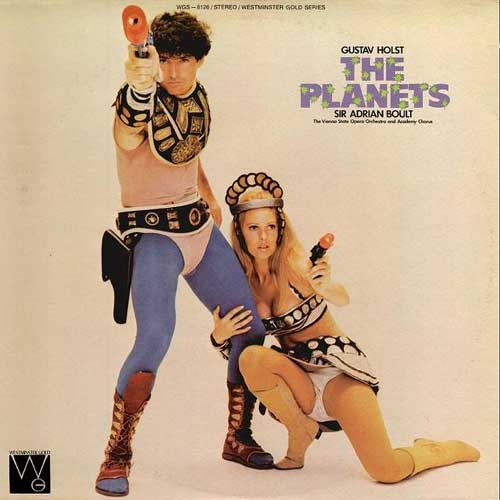
There seems no denying the widespread opinion that photos of an orchestra performing are visually very dull. In the days when LPs were a wonderful canvas for art directors, except for putting the conductor on the cover, a classical music album with an image of orchestra on the cover was much rarer than one with something else more contrived.

Most of the photos I see published today, even in the
specialist press, fail to capture any of the excitement of hearing a full orchestra in the flesh. It appears too that newspaper picture editors have very little enthusiasm to run classical music photos, even if given a free handout, and do not expect anything interesting from classical music photo calls unless there's some very attractive female performers willing to play that card.

From
12 June to 12 July 2008 the Eastern Daily Press published 21 music stories containing the keyword ‘orchestra’. A larger sampling would be needed to be authoritative but a simple methodology of counting how many photos accompany music news, previews and reviews in newspapers can indicate how photogenic each musical genre is thought to be.

It appears from the chart above then that if you want a photographer to turn up for a photo call for your classical concert, you must offer a theatrical production with costumed characters in or near Norwich. The single classical concert photocall that made the paper was a ‘stunt’ with a bewigged and cos
tumed performer in the Norwich city centre offering visual value and indicating some imagination of the publicist perhaps.

The other music stories that got assignments apparently that month were a production of the ‘Rat Pack’ with characters in the personas of Dean Martin, Frank Sinatra and Sammy Davis Jr, a feature about the end-of-the-pier show at Cromer with its musical director photographed in front of some leggy dancers and a ‘good news’ story that a local youth choir had been selected for the Welsh Eisteddfod.

Conversely, over the same period, the stories keyworded ‘concert’ are eight reviews or previews of pop concerts, all accompanied by performance photos. Three previews of am-dram productions and news that the Diss Carnival was to be revived were reported without photos for what should be thought obvious reasons.

What is also interesting is the news value of the classical music stories that went without visual illustration. Some were news of significant cultural 'wins' for the region. This is also surprising as a check of each orchestra or performer mentioned without a photo shows that 10 out of 12 have a website and a publicist contact. Six of them are 100% professional and internationally renown.

Such low expectations is probably why the comedy/classical trumpeter Crispian Steele-Perkins unfortunately missed out on getting his picture in the paper but his website is full of comic images available for download. I can only deduce that even with publicists working for them, classical music is ‘Rodney Dangerfield’ to picture editors.

For the Norwich and Norfolk Festival held in May, very few of the orchestras had any images of themselves to accompany their website listings. If it wasn't an image of their conductor, they relied on classic paintings to convey expectations of their music.

Publicists and the orchestras that pay them have given up trying and it becomes progressively harder to convince classical performers that engaging photographers will get them tangible results. This has become a vicious circle spiralling downward into enforced mediocrity in the pop music world as well but at last, I hear voices of alarm coming from there.


POSTSCRIPT

I have often asserted my disgust with literary 'log rolling' but this post has been endorsed by the music blog 'On An Overgrown Path' based in Norwich. Bob Shingleford, who was once very senior publicist for EMI says
it's well-researched piece that agrees, he says, with Julian Bream's assertions "that novelty and transient fashion are the preferred currency of today's media". Thank you for the mention Bob.

Handel - actor John Hare - in London street. Photo: Simon Finlay

Friday, 11 July 2008

Social Change

I once got a grant from UnLtd who have just told me that if I recommend someone wanting money for a social enterprise to them and they get a grant, I'll win a toaster. Not really. I will get six hours of professional coaching from Mirus Coaching and £250 cash. I'll give it a punt.

If you’re a social entrepreneur in the East of England and you're looking for money for a scheme, get in touch.

I'm a bit surprised though that UnLtd has tried to drum up business this way. I would have thought they'd be oversubscribed with applicants and wouldn't need any field agents. Then again, if I'm doing their marketing for them, it must be working.

I had no idea what a social entrepreneur was until I got money off UnLtd* to publish a guide to water towers which engaged a lot of people in very positive activity and now I can see there's lots of ways that photographers can be social entrepreneurs and I can think of several ways how what I know can be put to some good.

UnLtd gave me free training whilst I was in their scheme which was very interesting. I'll never forget meeting Luke Fitzherbert.

These kind of funders don't seem averse to paying for expensive kit either as long as you document everything properly.

I've just heard of some new sources of money floating around local govt. in East Anglia for getting NEETs off benefits which big charities will likely scoop up because they have people employed to look for it and they will get in there first. Digital media seems to be a fashionable way to engage young people to foster enthusiasm in applying themselves.

In which case; those charities could be looking for people with media skills such as photographers and filmmakers to deliver the services. Many photographers I know are passionate about improving society and having a meaning in their life and work more than just money. It's why they were drawn into photojournalism in the first place.

I gather though from many colleagues that shooting images for charities and good causes to promote and record their work is interesting but really badly paid.

Apart from that your subjects can be incredibly difficult, "charity" seems synonymous with poverty and employees and contractors are often expected to treat their jobs as a vocation or donate their work for free even though some charities have bulging coffers and the directors are driving Jaguars but they will still send begging letters to pensioners. (My boss on the other hand drives a secondhand Volvo).

It may well be that the economic downturn we are facing now will force those ones to rely on their huge reserves in the scenarios they said they were keeping them for.

Social change has today become a business like any other. Personally, that seems to be a model that works but the cost is, like business, that there are honest businesses who put the customer first and those in it entirely for themselves. And in business, for there to be winners, there have to be losers.

Openness and scrutiny from the media I hope will keep it fair and honest.

POSTSCRIPT

on Radio 4 this morning Allyson Pollock demolished the argument (pushed by US health care interests) that private businesses can run hospitals better than the public managed health care system and used the same "for winners, there have to be losers" argument. What she means is that the unprofitable and difficult care won't get any private investment.

Too right. Having lived in the US with about the very best health insurance coverage my job at Warner Bros. offered, I still shudder at the thought thousands of conditions being excluded from coverage and the fear of crippling co-pays and all the form filling and seeing twenty people alone employed at my dentist's office just to manage the billing which, after his plane, was his biggest overhead.


*UnLtd paid for the printing.

Thursday, 10 July 2008

Pretty woman: Ugly photo.

I have wondered where I can nominate examples of totally crap news reporting either by journalists or photographers that can be voted on by readers other than on this blog.

Here's an example of a story recently in my local 'paper' (link) about an interesting 'personality' who has been willing to lend her name to promote an
interesting East Anglian artist, a story that was totally ruined by poor photography.

I don't advocate complete job demarcation in journalism. Plenty of monkeys can hold a pen and some blunts can use a camera but I am offended by seeing rubbish photos taken by a writer on their 5MP camera phone in too many news articles these days. I presume that is the problem but another problem is that so few photographers are given a byline (even if the writer is) that it is hard to measure and apportion blame when you see a crap photo foisted on the reader.

'Dead tree' news publishing is dying (while many newspapers have profitable online operations) and as budgets and staffing are forever being squeezed, editors sending both a writer and a snapper to cover a photocall, feature or interview a personality is getting as rare as hen's teeth.

Now, before I go on, I'll admit I might be thought, by them especially, to have an axe to grind with Archant. Why? Well, mainly because they're local and there's no alternatives so I complain about them more than other publishers but in fact they're no worse than many others on these issues. Which is sad if that's the benchmark.

Take the image above: is it really intentional that the hard shadow of the sculpture creates what looks like the outline of a human figure with a male appendage pointing directly at Ms York's breasts? Accuse me of a dirty mind all you like but there is definitely a subconscious message in this photo. The shadow forms a figure with either a phallus or a finger. Any way, it's an intrusion as bad as having horns coming from the head of your subject.

It wouldn't be the most exciting assignment ever to cover but you've got Susannah York, the lovely, still gamin, five times nominated, two-time Oscar winning actress on the verge of a comeback. You've got to go to over to the Sainsbury Center, the proof that Norwich is not a cultural wasteland, which is minutes from your office. You've got an renown artist long connected to the region and curators on hand to fill in the gaps. Tough day isn't it? What do you do with it?

Evidently this photo was carefully thought through and displays a genius for capturing the moment. I can imagine the photographer's internal dialogue as they worked out the way to tell the story. "It's about a famous person and an art show; stick the bird in front of the art and bish, bash, bosh; job done. I'm off to the pub..."

In this digital age, where everyone assumes anyone can take a photo now, standards should be rising, not falling.

It would fulfil my expectations if it was taken by the journalist sent to interview Ms York or by some bystander at the Sainsbury Centre but it wasn't. It was taken by someone I am reliably informed that has been working as a photographer at Archant for years.

Cripes, Googling him says he's an award winning photographer. Now I'm burning bridges and the boats here.

I'm not against blunts taking pictures. It's just disappointment and despair when a story that has every potential to be
interesting gets thrown away like this. We can all have off days but how can the editor/s fob this off on the reader? That's what angers me. It is either cynicism or ineptitude. Publishing this image shows no respect for the subject or the reader.

I suspect the filmmakers and Sainsbury Center are disappointed, having pulled in a big favour to get Susannah York there and getting practically nothing to show for it. That photo won't get into Aesthetica and I wouldn't show that cutting to a client.

I am sorry if the poor 'tog who claims authorship will feel unfairly criticised but if you're an artist, judgement on your work is being passed every millisecond the synapses of your viewer registers it.

This is one image that should have been spiked, at least cropped, fer crissakes. Those black spaces off the edge of frame, the horizontal framing, the upward looking viewpoint, the disembodied torso, not even a proper 'cowboy', they're wrong, wrong, wrong. And don't tell me it's clever post modernist irony or any of that sh*te. I reckon Roland Barthes, if he was alive, would have a lot to say about it.

I think I'll go now and enjoy some wine and the last of the evening in the garden but if anyone ever finds a 'rate this publication' site like ratemyprofessors.com, please share.

POSTSCRIPT

All of a sudden, 24 hours later, it just got more complicated. The following day the same story is in the sister paper, the morning daily, with
photos by the same photographer but a with different writer byline where the image used is much better. It's not quite Douglas Kirkland but certainly presentable enough for a newspaper and the same standard as thousands of press and PR shots taken daily. It's still one subject stuck in front of another but I can't know the circumstances this was taken under so I'll give everyone the benefit of the doubt. There's a bit more personality slant in the EDP story but that's the point of having Ms York there, otherwise the 'story' would be a listings item. The next gadget in the PR toolbox could be to have Susannah say something controversial to get a headline but I guess she doesn't owe anyone that favour.

OK, everyone can go home now. I can still stand by what I said: the first photo IS crap. It's an outtake so that was the editor's call. Given they must have had a selection of images to choose from, the 'tog is redeemed BUT it still troubles me. Why on earth does the Evening News run the story like a total piece o
f sh*te and the EDP run a better and more in-depth version of the same story 24 hours later? I can only suppose it is reader demographics or has someone been reading this blog? I suspect that in the Evening News, art news is just space filler whereas those who might actually go and see this exhibition will read the EDP.

Then this brings up the whole can of worms about practise in documenting of the arts and its relationship with the media which interests me, especially in the areas of performance, but that is for another day.

Do you know anything different? Comments are welcome.


Thursday, 3 July 2008

No man's land

There are some startling revelations in a recently published novel I have just read, a true story about a young woman’s tragic liaison with an older man that estranged her from her mother forty years ago.

I have to ask her, so who took the set of Bernard Leach coffee cups?

The dead always leave us much more than their possessions. The tangible inheritance I received from my father was ten shillings. I was seven. He sent me a postal order a day before he sent his second wife and his lover each a letter to say he was going to kill himself. Then he did it.

If only the inheritance I had got from him were happy memories of his good life.

A few years ago I had a conversation with the author while she was setting down the groundwork for the book before me now.

In her ever kind and gentle way she sounded out my feelings on her mining of our shared past. A past that is so entwined, that our meetings still cannot get to goodbye without one of us mentioning him.

Although my refusal would not have changed her mind, I gave my blessing for her to tell her story for I have always had an agenda myself that this story must be told. If only I had her craft and skill I would do it. I was disappointed that an earlier incarnation of the story did not satisfy my desire – as much as hers – to put the story behind us.

The novel has real names but holds back giving the surnames of some characters; her lover and thus his three wives and four children but all are mentioned much more than in passing.

This was not because of her or her publisher’s fears of libel but I think to spare them from the pain of public identification; which is why I now give them the same anonymity. I expect that this is pretty flimsy for anyone that has read a good book lately.

I think that other people's feelings will be hurt by her claims about her lover’s personality flaws if they become known by people who can never understand the whole truth.

But even though their identities are safe for a while from that assault by association, the narrative contains many other emotional bombs that reawaken repressed memories in those concerned. Or, like me, cause yet another distraction from day to day living to reconsider a past either wished to be forgotten or remembered with its just glory but not left in the no man’s land it is now.

It must be an unfortunate but common dilemma for authors to balance their right to say their respective truth against the rights of the subjects but if she hadn’t related his confession to a taboo desire (never fulfilled); then there wouldn’t be a story. Many of the critical reviews highlighted that aspect of her lover’s character out of all proportion to its importance to the narrative. Sex, violence and death are fairly reliable at keeping the reader interested.

A defence of the author and critic’s rights could be that this character is no reflection on his descendants but any social scientist will tell you differently. In his world, parentage, class, school tie and accent all mattered. In my version, I will tell you how judgements by people made from his association with others first gave him advantages and then brought on tragic consequences.

Because of that, several people I love will be wrestling with whether they should read this book and many people around them who know this story too will be on tenterhooks whether or not to mention it to me. Honesty will prevent this episode becoming another weeping sore, yet another difficult subject in our collective tragedy. Until I find the catharsis that the author had, I won’t cash that postal order.